

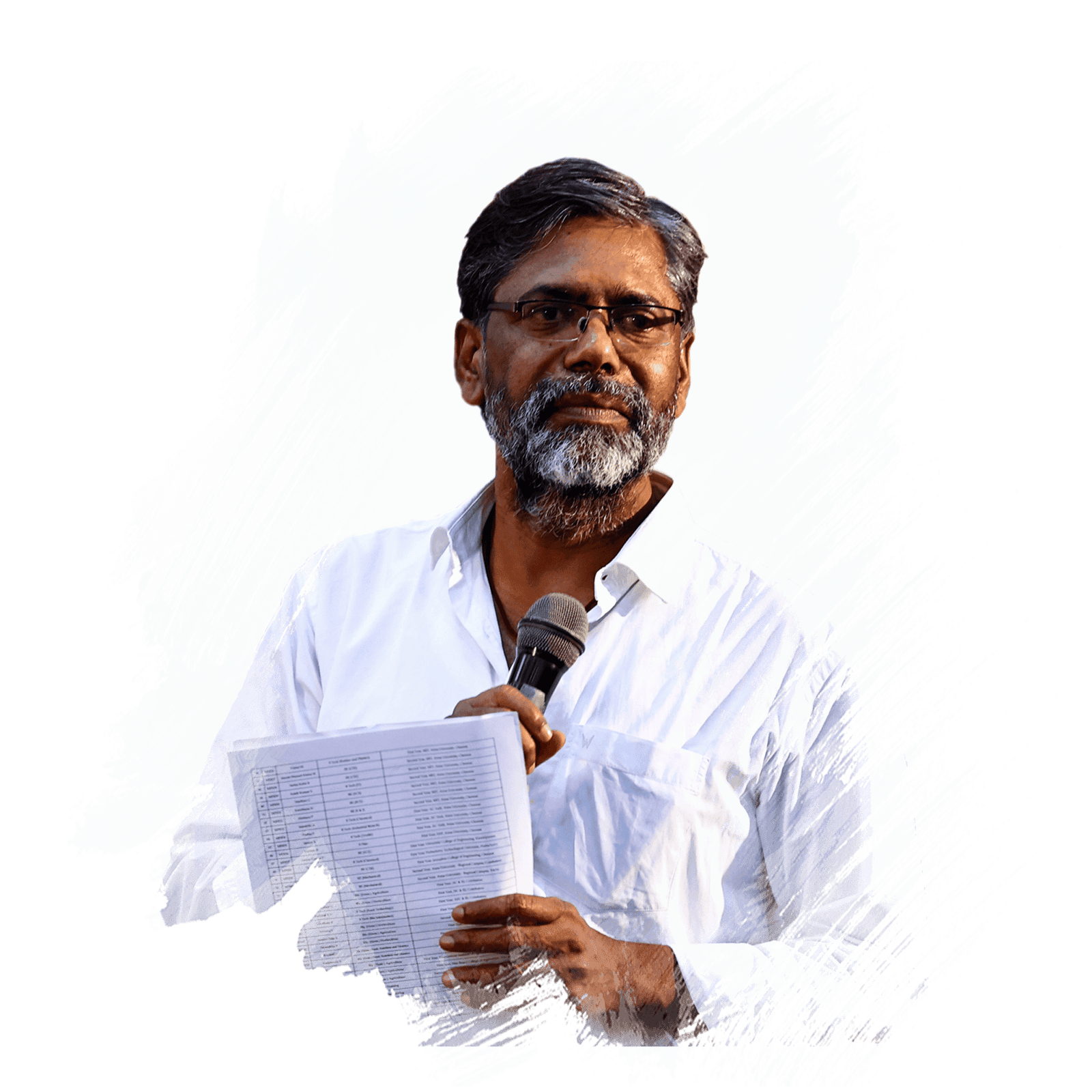
When people speak about Mugavari Foundation today, they often speak about numbers – it is more about the scale and the impact. What is under the surface is a lot more – it is the story that began with a promise. Mugavari Foundation is the manifestation of this promise, made by a simple young man from rural Tamil Nadu, who continues to work behind the scenes only because he honours the promise he made to the first of the many deserving students. The journey of promise has now evolved into an organization and is on its way to becoming a transformational movement held together by shared beliefs, focused initiatives, transparency, and purposeful gratitude.
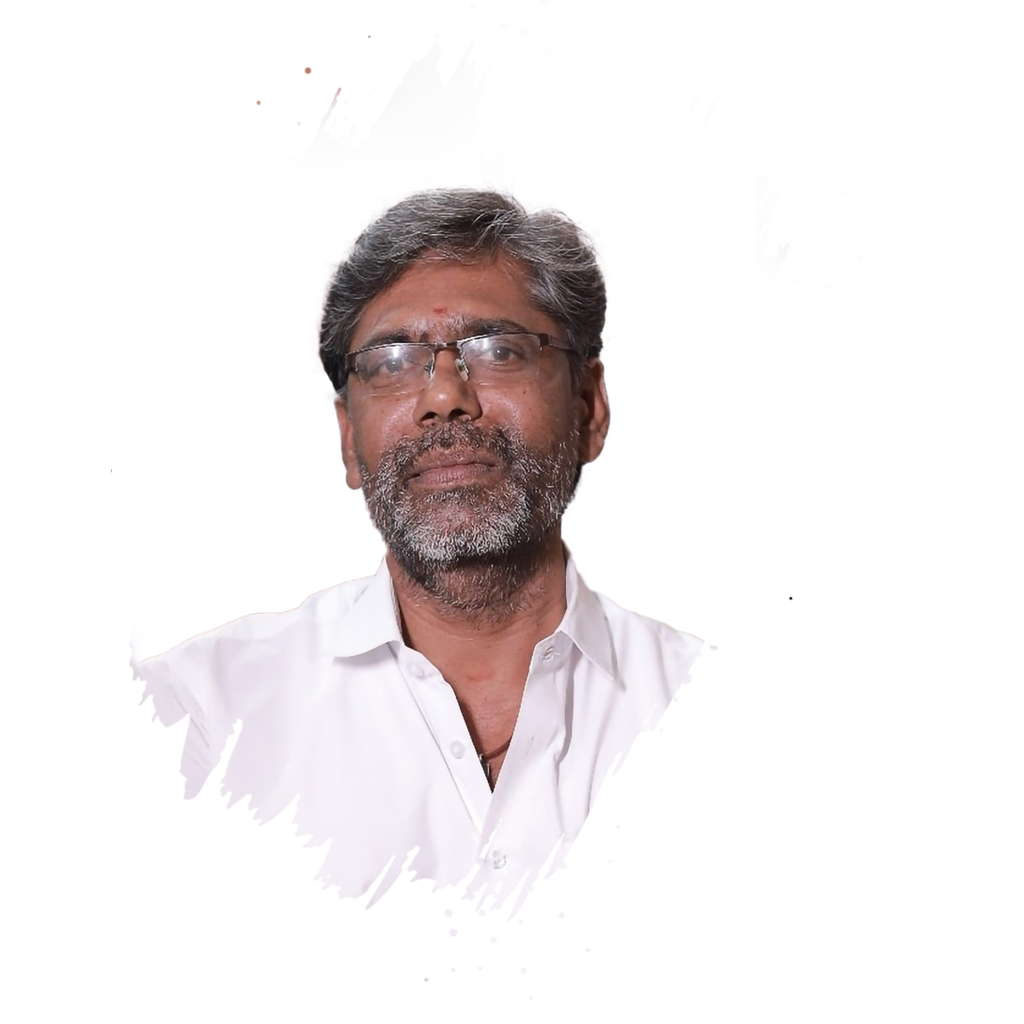
eeting Ramesh is a humbling experience. This self-effacing founder is quick to move away from the limelight, saying clearly that Mugavari is not a person – it is an identity that highlights the achievements of many deserving students!
This is the foundation on which the earliest beneficiaries crossed over and completed a higher education degree, fulfilling their dreams and the dreams of their families. To Ramesh, Mugavari has always been that one place that the underserved could go to, knowing that support would be given to them at the right time. He is there providing direction and support to every deserving student, who need to find their footing.
When you listen to this calm explanation, you don’t realize that below this calm surface is a life of struggle, denial, shame and poverty. To Ramesh, his journey has strengthened his resolve to make life easier for those who have a similar life to his. Repeated friction and disappointments did not deter him from pursuing what he wanted; he stood firm, resolute in his belief that he would be able to provide the support that he had promised a deserving student – and that is precisely what he did and continues to do at Mugavari.
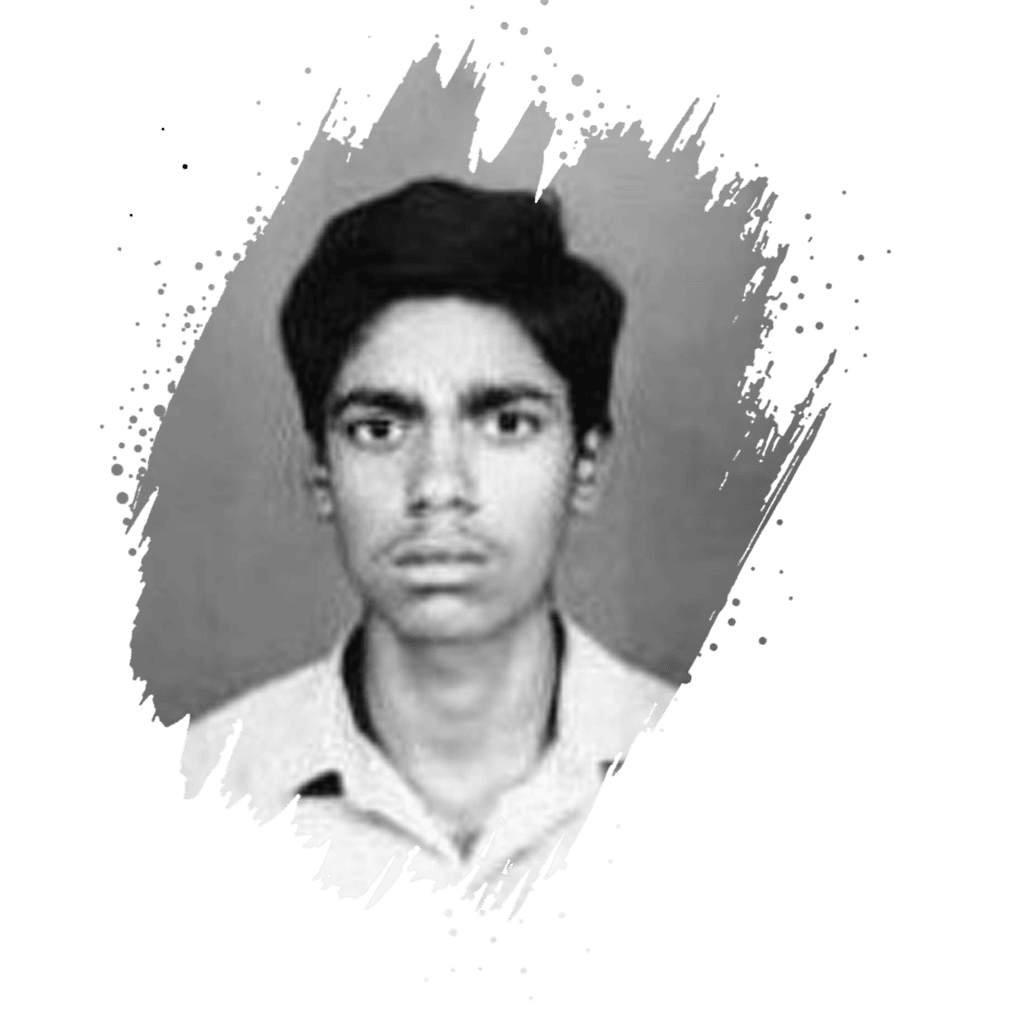
Ramesh was born into a family of agricultural wage labourers in Arathi Agraharam, a village in Thalaivasal Taluk, Salem district of Tamil Nadu. Here, poverty was neither dramatic nor discussed – it was just a way of life, accepted by all. It was work, home and work again; a place where hopes and aspirations had little space. Money arrived in small amounts and left just as fast as it got there!
In spite of these harsh circumstances, the home he grew up in was one he fondly remembers – basic, yet full of love and humaneness. His mother, Smt. Pattathaal was known for her steady temperament and practical approach to life. When disagreements arose, she would intervene not by raising her voice, but by listening longer than others were ready to.
Reconciliation was her tool – and she ensured her children learnt this too. His father, Sri Kuppudaiyar too practised a form of quiet courage and disciplined hard work; it influenced and shaped Ramesh, helping him believe that every life had to be nurtured and supported. Early in life, Ramesh learned the value of sacrifice. It was not something that he was told to do; it was a value he observed and absorbed, one that he practices with fervour, till date.
Rama & Lakshmana – identical twins who were about fourteen years younger than their sister, Perumayee. To teachers, the two boys were quite impossible to tell apart. Only a small mole helped distinguish one from the other. Confusion was common; the memories surrounding this are bittersweet as it tells of poignant situations that the twins navigated through only because of dire need. One of the not-so-good outcomes was the separation of the siblings in school. The teacher decided to put each of them one year apart. Ramesh gave up his seniority and ensured that his brother went into the higher class. This was not just a symbolic gesture; it showed the level to which he would go to accommodate the wish of his brother. Lakshmana did no less: he compensated in a big way later on in life.
As they grew older, some hard decisions had to be made. The family could not afford higher education for both boys equally. One of them had to step aside in order to allow the other one to progress. Here, his brother did so without any argument; he chose to work so that Ramesh could continue studying. The noble thing is that this was not considered a sacrifice; it was more of a shared understanding of the circumstances that the family was in.
Everything was shared – meals, uniforms… hunger too. What was not shared was opportunity. This did not make Ramesh feel guilty; instead, he looked upon it as a responsibility that he had to shoulder. His studies were made possible only because his brother had stepped aside to give him that space. He was therefore determined to reciprocate what he had received, in the best possible way.
School was a good five kilometres away and Ramesh walked the entire distance every day; very often this was done barefoot. It was a normal thing since shoes were rarely part of daily life in his family. They were used only when absolutely required. When laboratory classes demanded footwear, he would borrow a pair – most often not his size – or sometimes those that were worn quite thin. He wore them only for the duration of the class and returned them immediately afterward, careful not to damage what was not his. The same was with uniforms as well. Ramesh and Lakshmana being one year apart in school resulted in them having exams in different sessions. Ramesh’s was in the afternoon while Lakshmana would complete his in the morning. Ramesh would wait for his brother to come back from school, so that he could wear the same uniform and go in to finish his exam!

The same situation existed with the pen that Ramesh used as a very young school-goer. Ink bottles were too expensive to even dream of – all that was possible was a visit to the store where for 25 paise, a pen could be filled with ink. To do even this, Ramesh’s father, clad in a mere loincloth would walk around the small village, trying to raise that meagre sum. Ramesh and his brother would be sitting in a corner, waiting for their father to bring them a filled pen for 25 paise – as they couldn’t go to school without the pen. The image of his father, walking around for something so small remains etched in Ramesh’s mind. That was the level of poverty that existed in the household.
Those days of not having essentials continue to be part of his memory. He believes that he needs to keep these in mind to help others understand that the journey has been arduous yet one worth struggling for. Being different because of sheer poverty is an imprint that cannot be erased.
This continued for quite a few years. In fact, years later, on his first day of college, he wore trousers borrowed from a friend and a shirt from yet another. To his father, there was nothing much he could do to change the situation. After long hours at a stone quarry, Ramesh’s father put aside some money for clothes that Ramesh could wear to college.
Recalling this, Ramesh points out that this realization was powerful: even at the threshold of higher education, he arrived supported by someone else’s generosity. The dependence continued. Education was never a smooth climb. He held onto it carefully knowing the value of what he had.

Ramesh’s first choice was a degree in Chemistry. Unfortunately, he missed getting the seat he wanted as he couldn’t put together the money required for a degree in Chemistry, in time. All seats were gone by then. Never one to be disheartened, Ramesh took the Mathematics seat he was offered and decided he would put everything into it – knowing full well how difficult it had been from him to reach this far.
In spite of all odds, Ramesh excelled, winning awards as Best Student and Alumni Association and topper in select courses. For a brief moment, his struggle had overtaken his situation. Then came the collapse – he failed in one paper. What broke him was not just the failure, but what followed. There was a delay in re-totalling which held him back while others moved ahead. He lost three precious months, staying back in the hostel, watching classmates leave, one by one.
The isolation was extreme. There were taunts and comments that made him shrink into a shell. In fact, the consensus was that hitherto success had been accidental and failure revealing. How could a person who won the Best Student award fail in one subject – the ridicule he faced was harsh. The fact that the delayed retotalling brought him good results – from 26 to 76 – did not ease the torment he had to face. What made it worse was that he could not go back home, as there were no funds to support him there either. One hard lesson that Ramesh learnt through all of this: merit can lift you in unprecedented ways – but it does not protect you from public collapse. Despite this roller-coaster ride, Ramesh became a university rank-holder at the end of his degree in Mathematics from Namakkal Arts and Science College.
It was around this time that his sister fell seriously ill with a cardiac issue. Finances were unavailable and all they could do was wait for help at the General Hospital, Chennai. Hours of waiting went by and Ramesh could see that there were others who came in later but received treatment only because they could afford to. Money was the deciding factor – Ramesh and his family did not have it. The outcome – her condition worsened. VIP patients arrived and were treated – but there was no help for Ramesh’s sister. When help finally arrived, it was too late. His sister passed away.
Ramesh was overcome with sadness; losing a sibling is painful but losing her because they did not have enough money was even more heartbreaking. He stayed with her for 76 days in hospital; ironically, 76 was the revised mark he received after re-totalling. Ramesh understood the brutal truth: inequality operates – not through cruelty, but through delay. Money decides whose time is considered valuable, and whose is expendable. This understanding never left him.
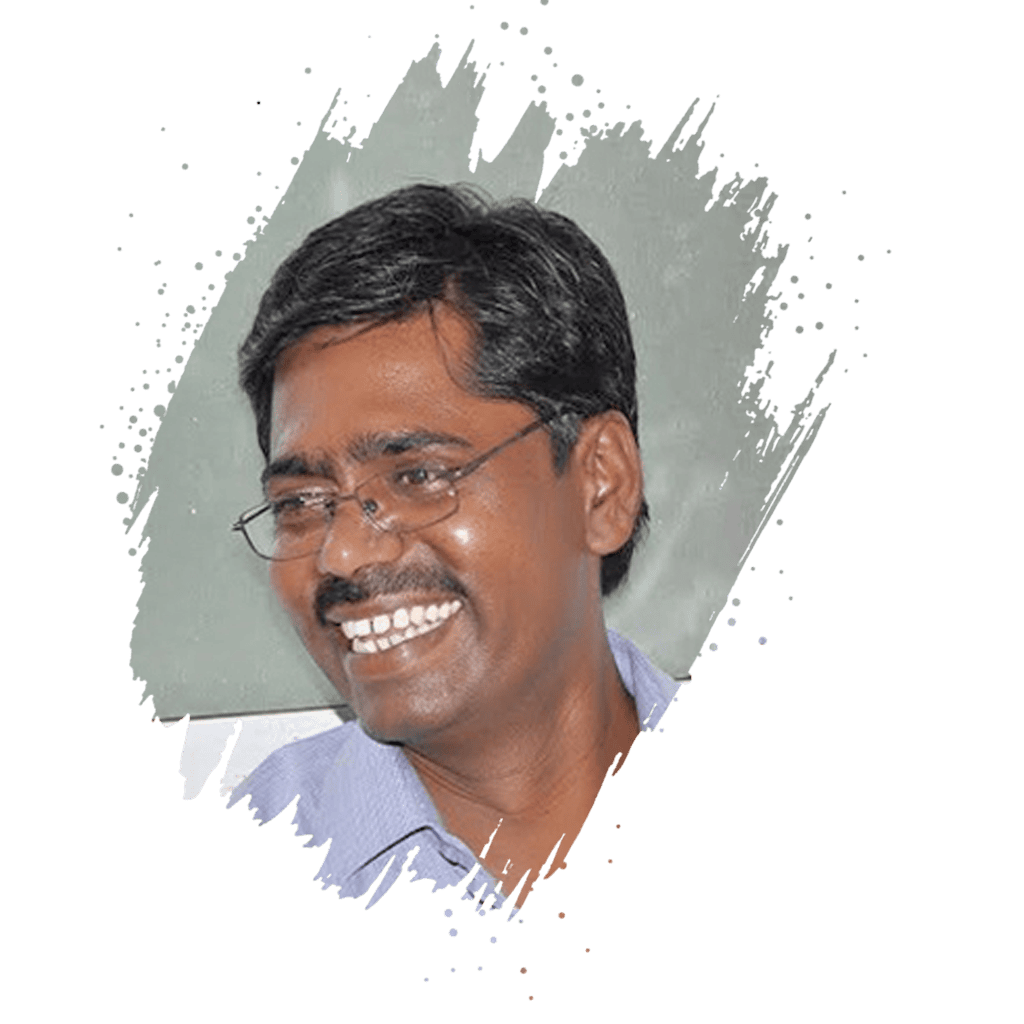
He decided to pursue the career of a Chartered Accountant and hence started preparing for them. One of the main reasons for taking this career path was the fact that it cost virtually nothing! He signed up for an articleship in G R & Co., an auditing firm in Salem. During his CA studies, Ramesh happened to meet a young girl who had done quite well at Grade 10. Her family was quite poor, and he managed to get her enrolled in a private school for Grade 11 and 12, because of her good marks. That’s when he made a promise – just a casual one. He told her that he would ensure that she becomes a doctor if she excelled in Grade 12. One of the main reasons why Ramesh made this promise was the heartrending circumstances under which he had lost his only sister. He thought if he could help create another doctor, many valuable lives could be saved.
When her results arrived 1136 out of 1200 – she came to him with her marksheet. Becoming a teacher would be a good idea, he said to her. This is when she reminded him of his promise – one that had spurred her on to achieve such good grades. Ramesh realized that his casual statement had given her the momentum and focus to excel. It was time to keep his promise and that is what he did. With the memory of his sister’s passing still fresh, he was determined to support this young girl become a doctor. At home, there wasn’t much that could contribute to this girl’s education, except for the one cow that the family had. He sold the cow, without actually telling his parents that he needed it for this student; all that he wanted to do was honour the promise he had made. Much later, after she became a doctor, he revealed that the money that was set aside (from the sale of the cow) for his CA tutoring, was spent to keep the promise. This wasn’t a sacrifice as far as the family was concerned; they were happy that a girl had benefitted from this. Later, he facilitated her admission into medical college with support from good souls. This was a beautiful beginning. Though not yet named, technically, Mugavari had come into existence.
To Ramesh, keeping a promise was never a choice; it was a commitment that was built on all that he witnessed at home. Helping people came naturally to Ramesh’s family. His father did not think twice about selling property to support his uncle’s studies, making his uncle the first graduate in the village. However, Ramesh’s parents relocated to Chennai and became construction workers to support the family, while the children stayed back at their hometown with grandparents & relatives. This showed that if the cause was good, his father did as much as he could. Ramesh’s mother was equally empathetic. Notwithstanding the badmouthing she often received, she would step in to resolve issues to ensure family harmony. Gratitude and empathy were hallmarks of this family’s otherwise simple life.
Growing up in an environment that focused on helping others, Ramesh was very comfortable in the company of those less fortunate than him – especially those who were handicapped physically in some way. It must also be mentioned here that at home in his native village, school and college, he has had close friends and associates who had various kinds of challenges. It was their challenges that drew him to them, wanting to be part of their lives and making it part of his own as well. He would volunteer to help as a scribe or take care of people with infectious diseases, only because he wanted to help. The loss of his sister further strengthened his decision to volunteering and supporting those in need.
In its early days, Mugavari operated out of a small, rented house in Dhandeeshwaran Street, Velachery. Students began arriving, not quite sure about the help they could receive. Ramesh listened – even when he had very limited answers and assurances to offer. Money was scarce; rents had to be paid.
He walked great distances to meet potential supporters. He waited outside offices for hours on end. Often, he returned empty-handed; rejection became routine. Ramesh realized that supporting his family was becoming more and more challenging; how would he now support deserving students? There were no savings and expenses were rising. Looking at the sincerity of his requests and the genuine deservedness of the students, there were many who came forward to help.
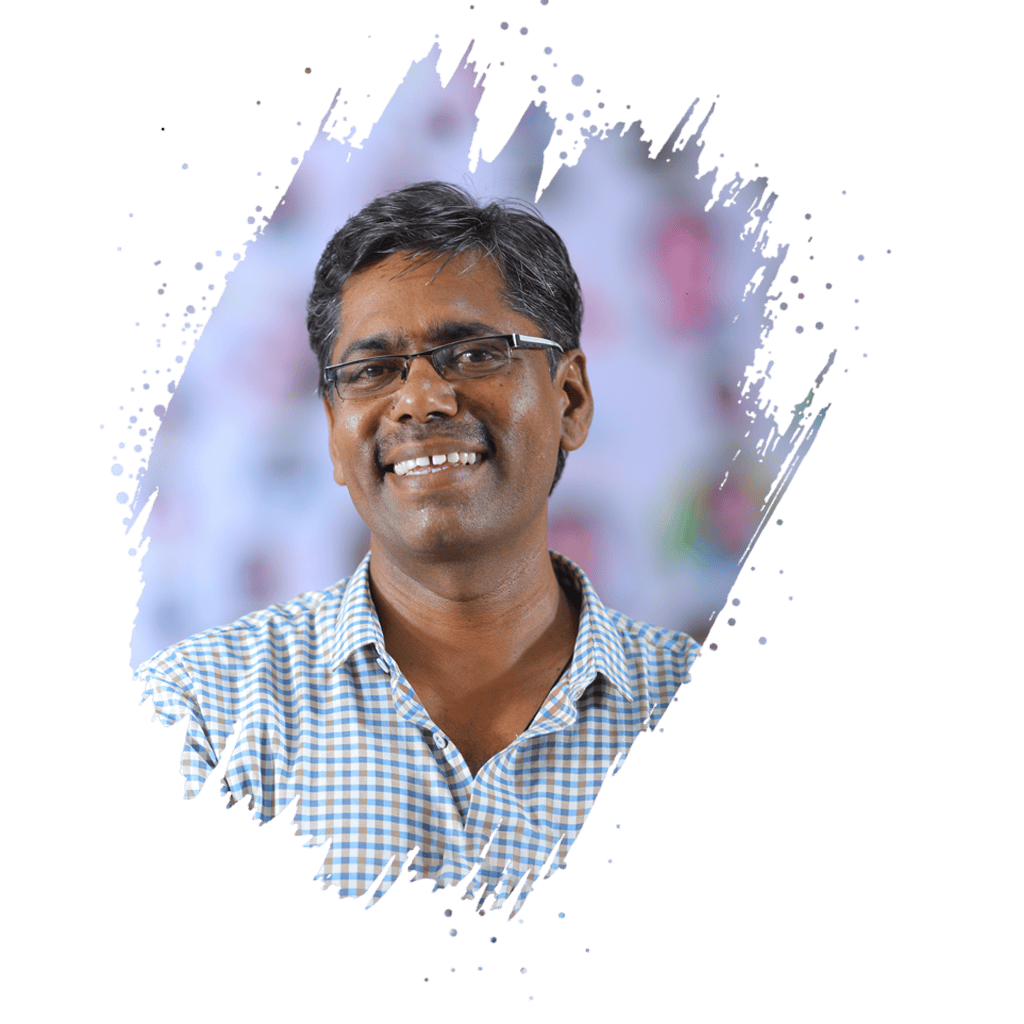
Becoming a Chartered Accountant was a challenge too. There were far too many things to juggle, and Ramesh had all but given up. Ramesh’s moment of epiphany arrived one day, while speaking to Mr M Vetrivel, Vetri for short (one of Mugavari’s early beneficiaries and now a trustee). Anybody can become a Chartered Accountant, he said; but it takes a different kind of person altogether to start an organization like Mugavari. For Ramesh now, there was no going back; Mugavari was here to stay, and he would ensure that it transformed into a movement eventually. Ramesh had found his calling. The sincerity with which he approached potential supporters and the promise he made to deserving students ensured that this movement would evolve over time, in the best possible way. His consistent investment of time made sure that help arrived at opportune moments, keeping the Foundation going.

Looking back on a long, challenging and eventful journey that he embarked on, quite unknowingly, very early in life, Ramesh is able to look back on difficult times that he has come up against. There were moments of disappointment, shame and sadness that he encountered, making him wonder how he would continue to cope. Today, he is able to confidently say how he has found answers to sometimes-unanswerable-questions, making difficult choices and emerging with a calm and balance that has helped him all these years.
It was years of discipline that he cultivated under the care and guidance of his spiritual mentor, Sadhguru of Isha Foundation. He attended his first session at Isha in February 2005. As a meditation practitioner he was able to handle the ups and downs that he faced. This pursuit was further strengthened with the yearly practice of Samyama and Samyama Sadhana sessions that he participated in – all 14 of them at the Isha Foundation. These became his inner scaffolding; they strengthened his body, steadied his mind, and allowed him to offer and endure without expectation or resentment. Acceptance and clarity soon became a way of life for Ramesh.
This has led Ramesh to think of Mugavari as a commitment rather than a charitable organization. He declares he is no saviour and he says he does what he does only from a responsibility that he willingly shoulders.
Mugavari has grown to 860 students in 23 years (in 2025). For Ramesh, this is his life’s journey; he breathes and lives Mugavari and his entire being is dedicated to the commitment of helping as many deserving students as he can. Never one to aspire for the limelight, Ramesh remains quite behind the scenes but is an intrinsic element of the Foundation. He believes that his purpose grows more and more meaningful because of this untiring dedication to every aspiring student – in continuation of the promise he once made. He strongly believes that it is this complete surrender to a cause that ensures that the Foundation operates on transparency, gratitude, and trust. Ramesh has always believed that quality over quantity is what really matters. Process is far more important than the outcome. Ramesh is a strong believer that if the process he adheres to flows as smoothly as a river, his vision will become all the more achievable.
There were many who came forward to help; these three benefactors made a significant impact over time. Shri A R Murugadoss who sowed the seeds of benefaction by helping the first student; Shri Saidai Duraisamy who provided much needed help in the form of accommodation and food and Shri CA TN Manoharan, who brought in systematization to take the foundation to the next level. These stalwarts were instrumental in making Mugavari what it is today along with CSR partners and countless individuals who stepped in at the right time – providing the much-needed support continuously. Ms R Sumathi stepped in to become a part of the Foundation, streamlining and systematically improving protocols and procedures to develop Mugavari into an effective institution. As one of the trustees, her passionate involvement with the Foundation continues to make a deep impact on the team.
Ramesh has learnt to handle all that comes his way with equanimity and soft responses. Though criticism and ridicule have followed him, he has learned to accept both without reaction. For him, dignity lies in offering help without lending undue importance to people. For many people who have immersed themselves in a life of service, they consider that they are instruments of the Almighty, destined to carry out the Divine Will. For Ramesh, it is more like being a chosen one, who God has placed in a specific zone – where he is appreciated and loved for all that he does.

Ramesh believes that Mugavari’s journey is far from complete. He speaks of two key goals that will give it this organization lasting meaning. One is a Magazine which is envisioned as a futuristic platform that welcomes representations from various segments of the education ecosystem. The vision is to make this magazine widely accessible, carrying quality content that can connect, inspire and serve as the best form of outreach. It will also trace the journeys of those who have grown with the support received. This will be a compelling account of their achievements and the journeys that they have traversed. He also speaks about Vanavil – an initiative launched in October 2012, by a former Mugavari beneficiary, Mr M Boopathiraja IRTS, the first Civil Services officer of Mugavari. This is a scheme that provides a platform for former beneficiaries who wish to give back to the Foundation. Mr Boopathiraja and Mr Vetrivel continue to be the two strong pillars that support Ramesh and Mugavari, every step of the way. They believe that initiating Vanavil will sustain the creation and development of the magazine.
The other visionary goal is the School of Mugavari; along with Centres of Excellence, this will be a learning space that nurtures knowledge and skills, building wisdom and a sense of gratitude. Ramesh believes that children must grow in a space filled with gratitude and kindness. Education is the best leveller, and Ramesh has no doubt that his school will be aligned to this thought.
A big problem requires a big solution – Ramesh is always ready and waiting. Without problems, he says, solutions would not be effective. New dimensions open up with every emerging challenge and Ramesh is eager to face each one. His spiritual guru has been the reason why his resilience has increased. His Samyama practices at Isha Foundation have further enhanced his resolve.
He fondly recalls his parents who were his first guides and value-givers. There are many instances where movies and books have inspired him – lessons he learnt that have stood him in good stead. The movies that made a mark were the Tamil movies, Ramana and Samurai and the Hindi movie, Lagaan. Ramana spoke of the strength of networking, while Samurai focused on fighting for noble causes, even when the beneficiary is not related in any way. Lagaan on the other hand brought together completely unconnected and seemingly ill-equipped people to form a team and achieve the unthinkable – beating a strong British team in cricket.
For Ramesh, a few towering personalities across diverse walks of life have left an enduring mark on his journey – both personal and professional. They did not only inspire him from afar; instead, they stood beside him, leading and strengthening every step Mugavari has taken. Among them, Periyavar CA G. Ranganathan, former Chief Election Commissioner of India, Shri T.S. Krishnamurthy and Swami Vimurtananda, Ramakrishna Mutt have a very special place. They have inspired him profoundly, and Ramesh carries a deep sense of gratitude for the wisdom, encouragement, and untiring presence they have brought into his life.
As Mugavari continues to grow, he is also wise enough to know that what he has started might take a long time to fully develop. He recalls these words of wisdom he once heard: one might plant a mango seed but never eat the fruit himself; others who come later, definitely will.
He is committed to doing these two things as personal goals: one is to read every day – every book has something to offer. Every situation and every human is a source of learning – the important thing is to recognise this and learn. The second is to remain in constant touch with the students he supports. He talks to them on a regular basis to ensure a sustained network.
The yatra has been long yet rewarding. Born Rama, his sister renamed him Ramesh when he was enrolled in school. The name continues and it was Palam Ayya (Shri Palam Kalyanasundaram, the Founder of Anbu Palam) who referred to him as Mugavari Ramesh; it was momentous in more ways than one. For Ramesh, this is just a duty and responsibility he is fulfilling. He believes that one day, the Ramesh in Mugavari Ramesh will be dropped and the one shining star that remains will be Mugavari – an institution that epitomises compassion, transparency, and gratitude.

© 2026 Mugavari Foundation. All Right Reserved. Designed & Developed
 Innov Touch Technologies Pvt Ltd.

 mugavarifoundation@gmail.com
 044 2476 2710